
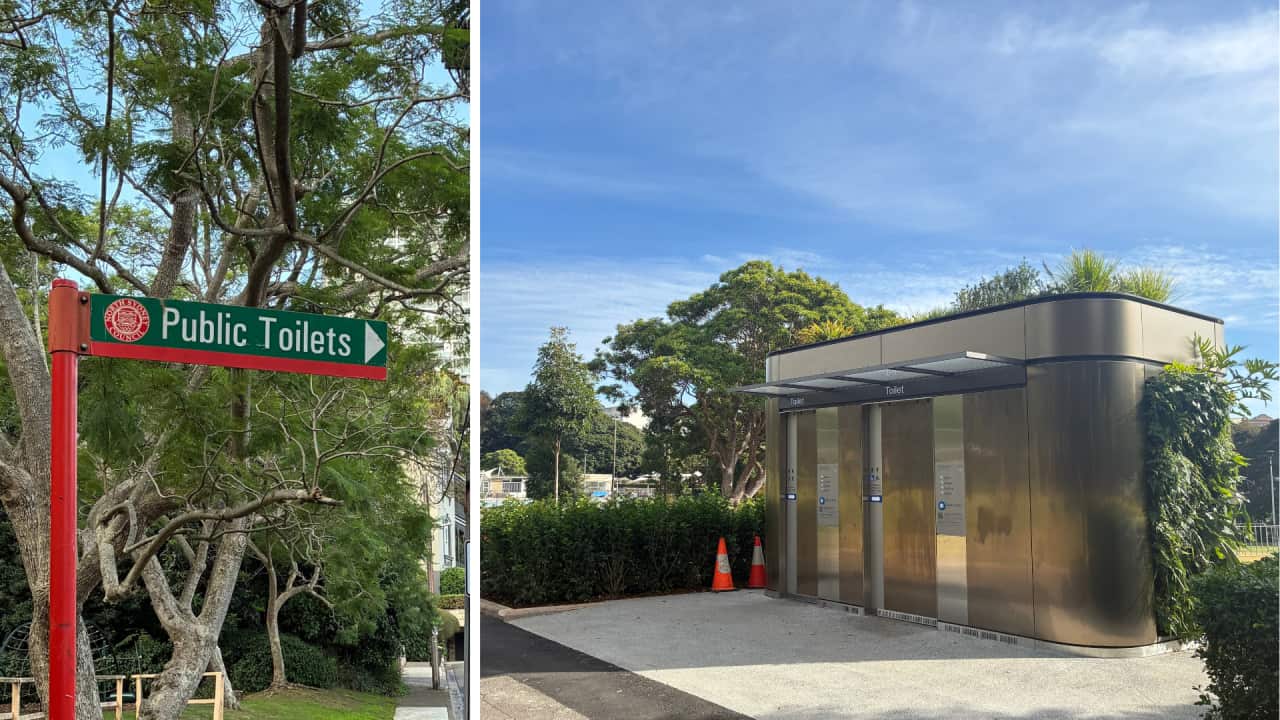

The daily lives of many Australians revolve around toilet access. But while public toilets are a vital part of urban infrastructure, they're often unsafe, unusable or hard to find.
Skippping work and school, cutting meetings short and limiting water and food intake: these are some of the decisions many Australians face because of the lack of available and accessible public toilets.
Jeramy Hope, president of People with Disability Australia and CEO of the Specialist Disability Accommodation Alliance, told SBS Examines accessible and safe public toilets provide dignity.
"Some of the difficulty is to be able to go to the toilet in dignity, to be able to have somewhere private, that is accessible, that is safe. For me, it means that I can navigate my wheelchair and my walker," he said.
Researcher Katherine Webber told SBS Examines public toilets are often undervalued.
They're often the last thing considered when we're looking at our plans and our public spaces and our transport networks ... but they are essential to social inclusion and social cohesion.Katherine Webber, researcher and public toilets advocate
She added that Australia lacks legislation around public toilets.
"There isn't a legislative requirement that says they are part of the public space network, or they're part of our public transport network.
"So if there is any conflict between user groups, or if it becomes very expensive to operate, it can be easier to close a public toilet than to ensure continued access."
In this week's episode, SBS Examines asks — how do public toilets highlight inequality?