Tips to reduce petrol costs | Fuel in Focus
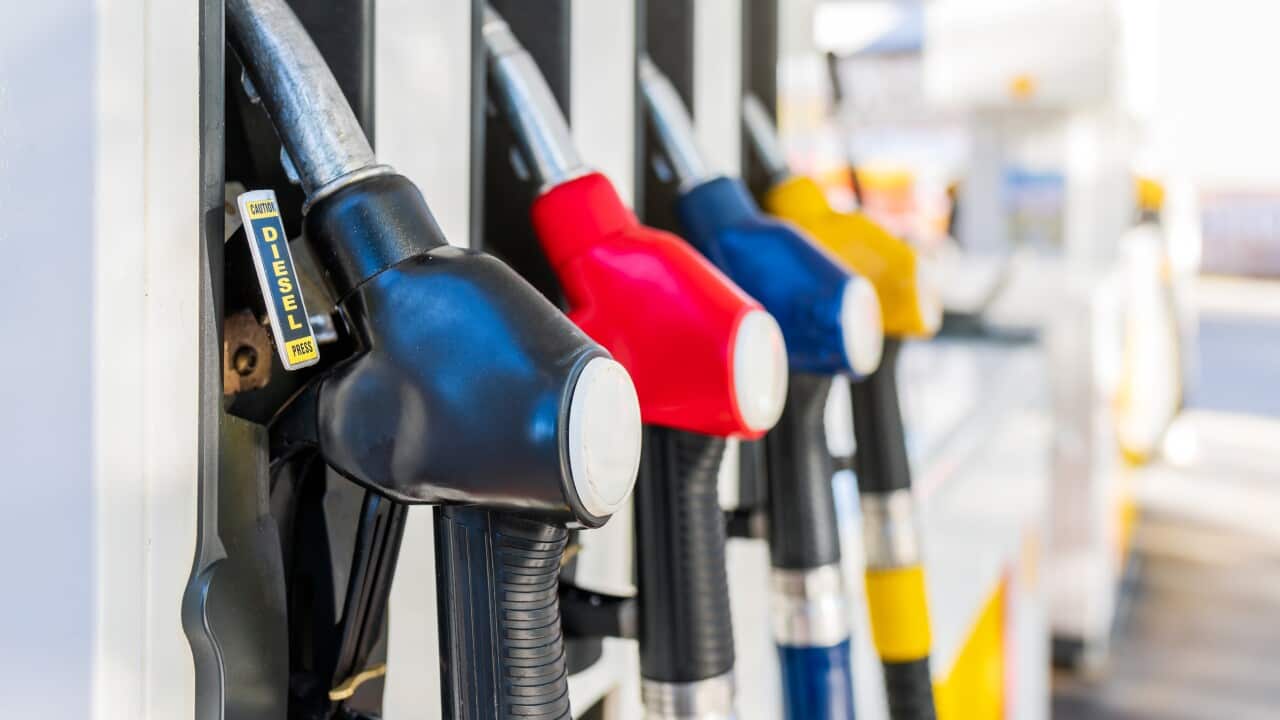
Fuel pump Dispenser close-up photo on Australian service station Source: iStockphoto / moisseyev/Getty Images

Rising fuel prices are putting pressure on household budgets across Australia, and for many people, it’s changing the way they travel. So what can you do to reduce your fuel costs without giving up your daily routine? Here are some simple, practical ways to save money on petrol.
spk_0
SBS acknowledges the Traditional Custodians of Country and their connections and continuous care for the skies, lands and waterways across Australia.
spk_1
You're listening to Australia Explained, Fuel in Focus, helping you navigate life in Australia at a time when fuel and energy supplies are changing.
spk_1
Rising fuel prices are putting pressure on household budgets across Australia and for many people it's changing the way they travel. So what can you do to reduce your fuel costs without giving up your daily routine?
spk_2
There's lots of fuel price apps and platforms.
spk_3
If you're driving around with low pressure in your tyres, it will significantly increase your fuel consumption.
spk_1
Welcome to Australia Explained Fuel in Focus.
spk_1
I'm your host, Melissa Compagnoni, and in this episode, we'll look at simple, practical ways to save money on petrol and hear how Australians are adapting.
spk_1
For many people balancing work and family, driving is part of everyday life, but as fuel prices rise, some drivers are rethinking their habits. Manjil Tamrakar travels about 70 kilometres between Melbourne and Geelong, 3 days a week.
spk_1
Until recently he sometimes drove, but now he mostly uses public transport.
spk_4
Previously I used to travel by car sometimes and go by train sometimes, but with the recent increase in fuel prices, now I have opted to use the public transport.
spk_1
Switching to trains means a longer commute, but it's helping him save money. The same amount he used to spend over 2 weeks now only covers 1 week of driving to work.
spk_1
That extra cost is affecting his savings.
spk_4
Not only the fuel like the other prices has also gone up because of the fuel prices, so yeah, it's impacting and it's reducing the savings that we are having for like the holidays or emergencies.
spk_1
Manjil's experience reflects what many people across Australia are feeling.
spk_1
A March 2026 survey by the National Roads and Motorists Association or NRMA shows more than half of Australian drivers have reduced how much they drive. Some are using public transport more often, others are combining trips to save fuel.
spk_1
Peter Khoury from the NRMA says fuel prices may ease, but it will take time.
spk_3
It'll take some months unfortunately for prices to get back to where they were in February prior to the war.
spk_1
In the meantime, small changes can make a difference. To help reduce costs, the Australian government has temporarily cut the tax on petrol and diesel in half. This change will stay in place until June 30th.
spk_1
But experts say everyday driving habits can also reduce fuel use. For example, combining short trips into one journey can save fuel.
spk_1
Keeping your tyres properly inflated can reduce fuel usage by up to 5 per cent, and your speed matters too.
spk_1
Driving at 90 kilometres per hour instead of 110 could reduce fuel use significantly. Peter Khoury says there are other simple habits to keep in mind.
spk_3
Don't carry unnecessary weight in the vehicles. Don't drive with a lead foot, especially off the lights, and also make sure that if you're driving around town and it's a nice day, turn the air conditioner off and put the windows down.
spk_3
But if you're driving on a highway and you're doing a higher speed, turn the air conditioner on, put the windows up, and that will reduce drag.
spk_1
A lead foot means accelerating too quickly, something that uses more fuel. When combined, these small changes can add up.
spk_3
It can if you do all of those things combined. So in isolation you'll see some percentage drops in your fuel consumption.
spk_3
If you're driving around with low pressure in your tyres, it will significantly increase your fuel consumption because the car has to work harder to move. But if you do all of those things, the tyres, making sure you put the windows up on a highway, don't carry unnecessary weight, don't drive with a lead foot, the savings can be significant. Some researchers suggested upwards of a 30 per cent reduction in fuel consumption, so it's worth doing.
spk_1
Another easy way to save money is to compare fuel prices before filling up.
spk_1
Liam Kennedy from consumer group Choice says many drivers don't realise how much prices can vary between petrol stations.
spk_2
One tip is just to compare prices before you go and fill up. There's lots of fuel price apps and platforms. I think a lot of people just sort of go on auto
spk_2
pilot and just go to the same servo they always go to because it's the most convenient and fill up there, but may not realise that they're being charged way more than they would if they were to go around the corner and fill up somewhere else.
spk_1
Each state and territory in Australia has apps or websites to help you find the cheapest fuel nearby. In New South Wales, there's an official government app called FuelCheck, and in Victoria there's a similar government app called Servo Saver.
spk_1
Using these tools can save money with very little effort. For people managing tight budgets like students, families, or those sending money overseas, even small savings on fuel can make a difference. For Manjil, switching to public transport hasn't been the most convenient choice, but it is helping him manage rising costs. And for many Australians, that balance between time and money is becoming more important.
spk_1
With fuel prices still uncertain, using less petrol where possible could be one of the simplest ways to save money.
spk_1
This was an Australia Explained podcast, Fuel in Focus episode, written by Sahil Makkar and produced by me, Melissa Compagnoni. Australia Explained managing editor is Roza Germian.
spk_1
For more practical tips on managing the cost of living in Australia, visit the SBS Australia Explained website or follow us wherever you get your podcasts.