IN BRIEF
- Repeated RBA rate hikes have slashed the borrowing power of individual Australians by $35,400.
- The housing market is expected to continue its trend downward with capital cities falling 5 per cent across 2026.
House prices are falling. But for Grace, buying her first home still comes with compromise.
The 29-year-old Wollongong resident and her partner began searching for their home earlier this year, conveniently as the market began trending down.
"It just happened to happen when I was ready to start looking," the 29-year-old told SBS News.
"We went into it pretty open-minded as we didn't know what we'd be able to afford, but heard prices may be dropping with the tax changes."
The pair had hoped to buy in the city where they live on NSW's south coast — but it's beyond their budget.
News that makes sense
Your trusted source for staying up-to-date with the world around you. Get free daily news updates and analysis, straight to your inbox.
"We're looking to buy south where prices are more within range," she said.
She said it was a "compromise" on what they wanted.
While the slump has made the market more attractive, Grace said there are still major issues.
"While the first home buyer scheme makes it more accessible to purchase a home, massive mortgage repayments are still a huge barrier, so I'll only buy somewhere where I can put down at least a 10 per cent deposit," she said.
"Another barrier is definitely bidding against those with clearly more money than you from the bank of mum and dad".
Borrowing power slashed
Money may be on the mind of many potential buyers, with new data reporting a significant drop in borrowing power since the start of 2026, thanks to the three consecutive Reserve Bank of Australia (RBA) interest rate hikes seen so far this year.
New data from Canstar reveals that an average income earner's maximum borrowing capacity had fallen by an estimated $35,400 since January, while couples seeking to buy a property had theirs slashed by $70,700.
The February RBA interest rate hike dropped borrowing capacity by $12,200 for individuals and $24,400 for couples. The March hike saw a drop of $11,800 and $23,600, and May's saw a drop of $11,400 and $22,700.
The RBA is expected to hold the cash rate at its next meeting on Tuesday. However, if Australians are subject to another rate hike, it would mean a $10,800 decrease in borrowing capacity for individuals and $21,800 for couples.
If that happens, it would mean a total decrease in borrowing capacity of $46,300 for individuals since the start of the year, and $92,500 for couples.
Canstar's data insights director, Sally Tindall, said it's a "classic case of one step forward and one step back" for prospective buyers.
"While falling property prices may look like a win for people trying to get into the market, higher interest rates are keeping borrowing budgets in a bind," she said.
“The challenge for buyers is that a cheaper price tag doesn’t necessarily mean a more affordable home if your borrowing capacity has been cut at the same time."
She said another interest rate increase will "tighten the screws even further".
“Headline inflation might have made a somewhat unexpected drop in June, but core inflation is still sticky," she said.
"The RBA might not hike on Tuesday, but it's difficult to see it ruling out further hikes altogether.
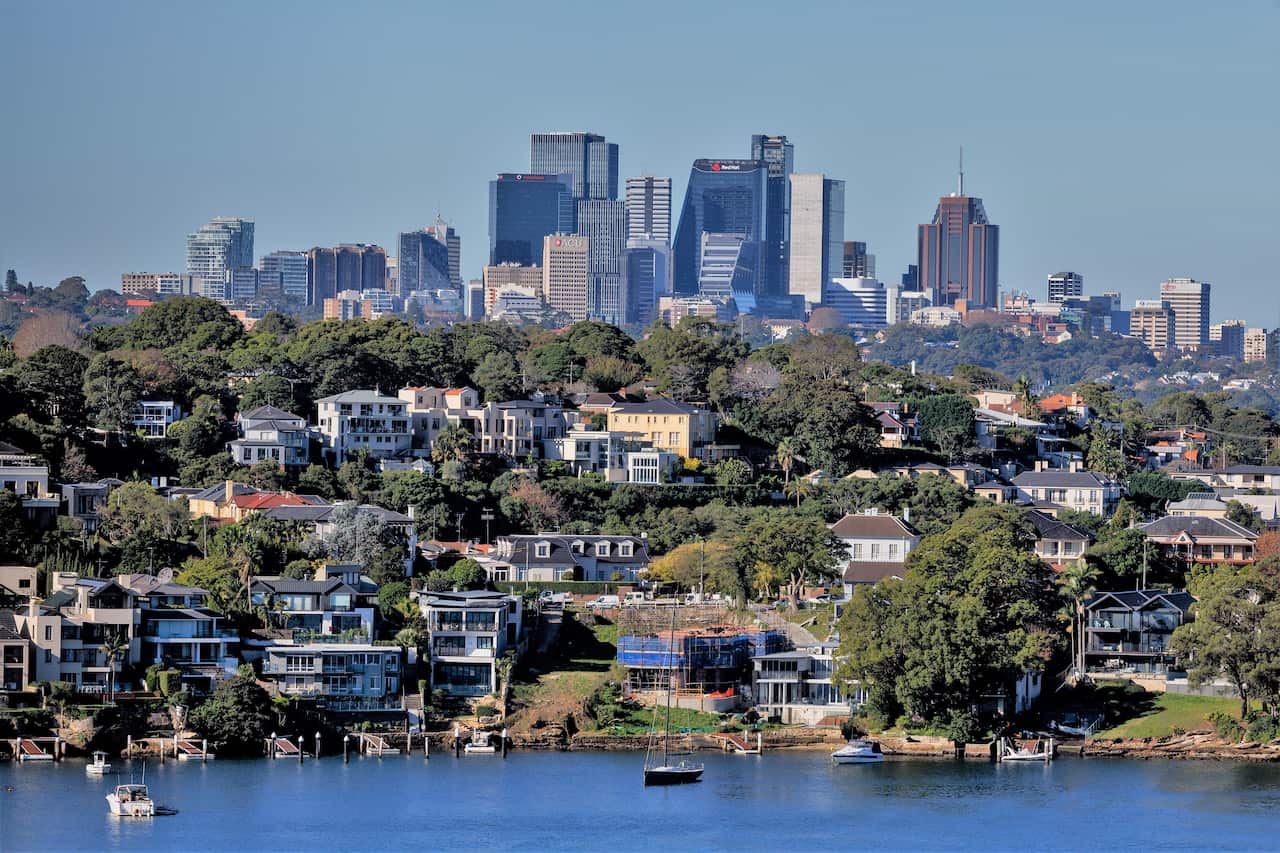
Australia's housing market has been experiencing a slump since June, and shows no signs of a plateau.
On Tuesday, NAB released its August Housing Monitor, which predicted that house prices across all major cities will continue to fall.
Melbourne and Sydney median property prices are sitting 5.3 per cent and 5.1 per cent below recent peaks, while Brisbane, Perth and Adelaide are 0.4 to 0.7 per cent lower.
NAB forecast that property prices across all capital cities could fall collectively by 5 per cent across 2026.
Sydney alone is expected to experience a total drop of up to 10 per cent — with the median house price in Sydney estimated at $1,452,024 by December, dropping $160,000 over the year.
Brisbane prices could drop $28,380 by December and Perth and Adelaide by $17,200 and $30,754 respectively.
By December, the cheapest capital city to buy a property in will be Hobart, at $807,260.
NAB also predicted the market will make a small "recovery" in late 2027.
“NAB’s latest revised forecast points to further softening in property prices through to the end of the year, not just in Sydney and Melbourne but in other capitals that were previously defying the rate hikes," said Tindall.
She said it's a "tough pill to swallow" for homeowners who purchased their home during the peak with "next to no buffer".
"Negative equity is a very real prospect for these borrowers. The key is to run your own race," Tindall said.
“As a potential new buyer, make sure you have plenty in the tank in case of tougher times ahead. Existing borrowers should prepare for another hike, even if the headlines are suggesting we’re already at the peak.
"Certainly, the RBA has not declared the battle with inflation won and done.”
For the latest from SBS News, download our app and subscribe to our newsletter.