In brief
- The annual rate of inflation has fallen, but not as much as the RBA had expected.
- According to the Australian Bureau of Statistics, there are still several driving factors keeping inflation from falling faster.
Australia's headline inflation rate has come in above expectations despite falling to its lowest level in eight months.
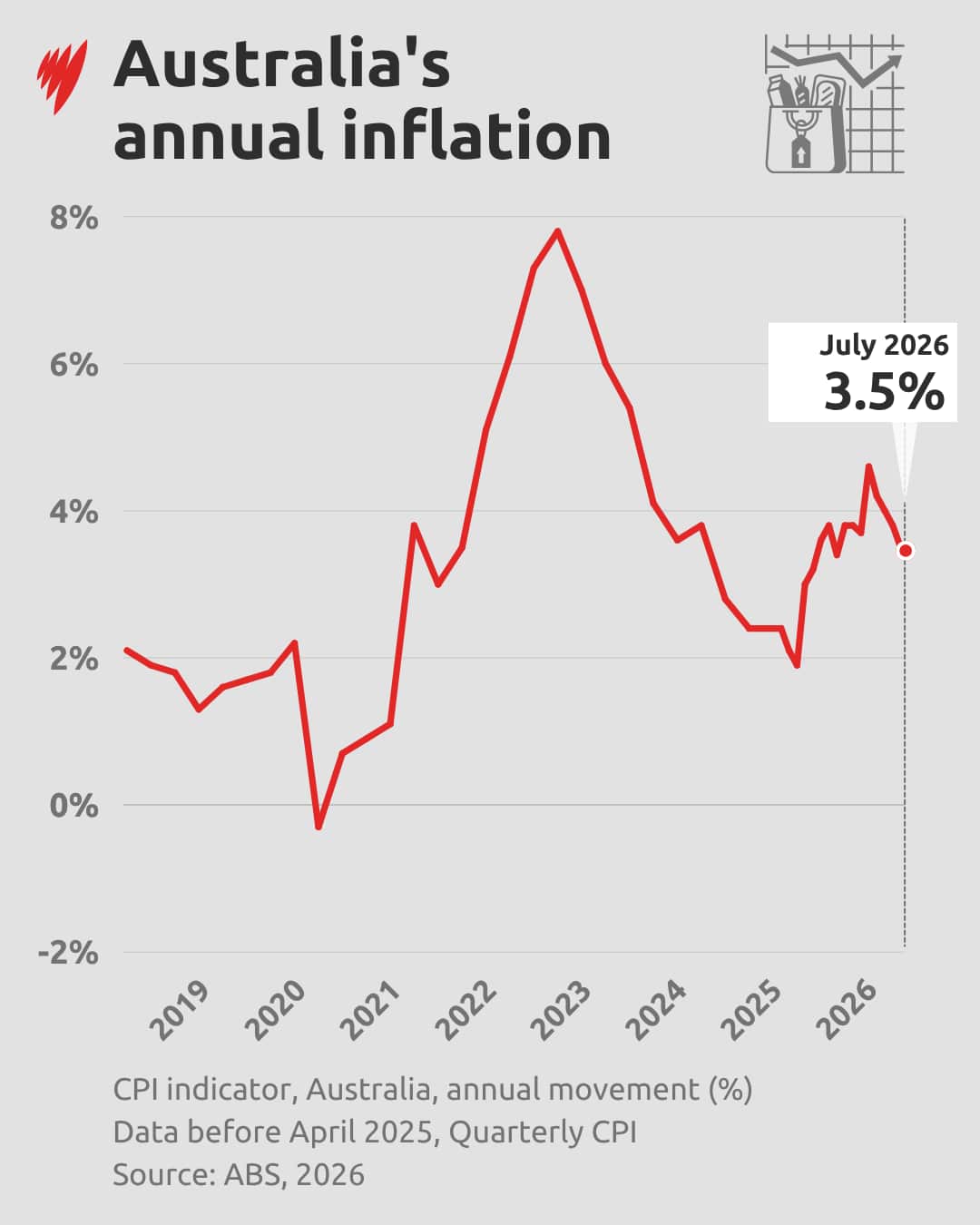
The consumer price index rose 1 per cent in July, with the annual rate of inflation falling to 3.5 per cent, the Australian Bureau of Statistics reported on Wednesday.
Largely as a result of a decline in the growth of electricity prices, headline inflation was down from 3.8 per cent in the year to June and the lowest level since November.
But consensus expectations were for it to fall to 3.3 per cent.
Worryingly for the Reserve Bank, trimmed mean inflation — a measure of underlying inflation that strips out volatile items — held steady at 3.6 per cent, above expectations for a fall to 3.5 per cent.
News that makes sense
Your trusted source for staying up-to-date with the world around you. Get free daily news updates and analysis, straight to your inbox.
Housing was the largest contributor to inflation, up 5 per cent, said ABS head of price statistics Rachael McCririck.
"New dwellings prices rose 5.7 per cent in the 12 months to July as builders passed on higher costs for materials and labour," she said.
Fuel prices rose 7.5 per cent in the month after falling for three months in a row.
"This was driven by higher world oil prices and the partial unwinding of the federal government's fuel excise relief measures in July," McCririck said.
Food and non-alcoholic beverages were also strong contributors in the month, rising 3.2 per cent, as well as recreation and culture, which rose 2.6 per cent.
Minutes from the RBA's August board meeting, released on Tuesday, showed the board was concerned about upside risks to inflation.
For the latest from SBS News, download our app and subscribe to our newsletter.