IN BRIEF
- A second US serviceperson caught behind enemy lines in Iran has been rescued, Donald Trump has said.
- However, the Iranian military has claimed that several US aircraft were destroyed during the rescue mission.
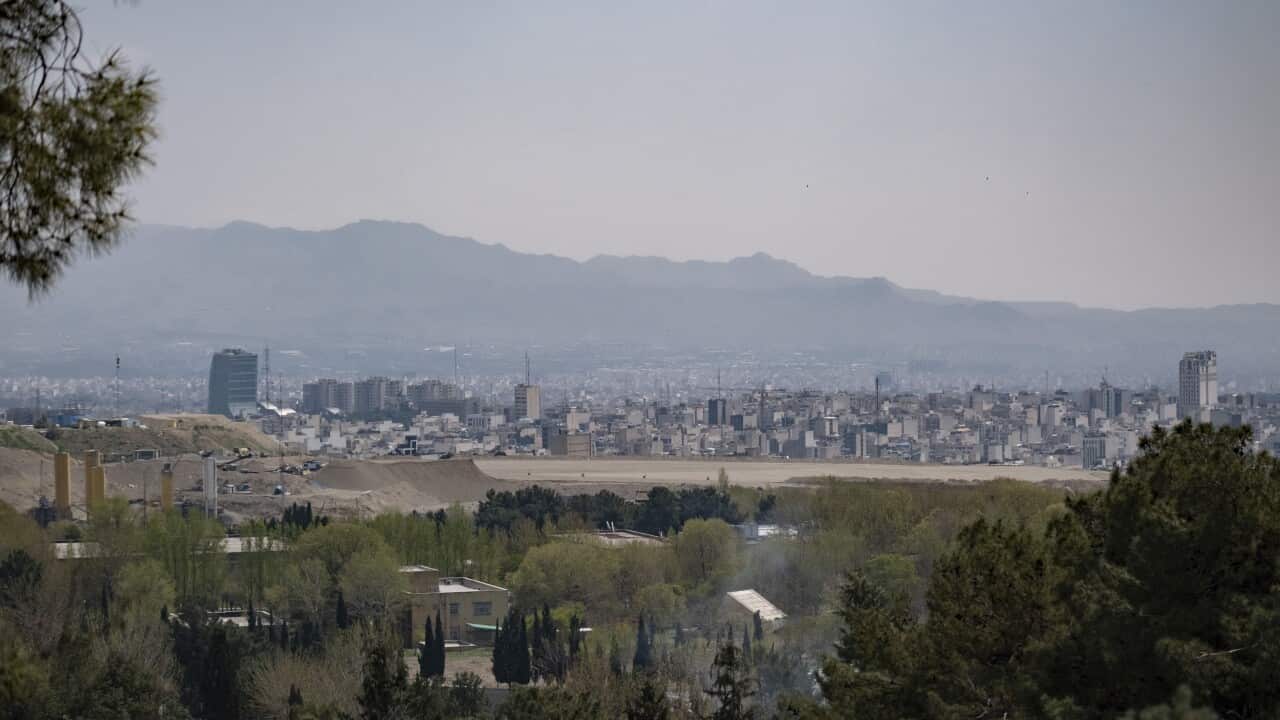
Several "flying objects" were destroyed during the United States' mission to find a stranded US serviceperson in Iran, the nation's Islamic Revolutionary Guard Corps (IRGC) said on Sunday, according to the Tasnim News Agency.
"During a joint operation (Aerospace, Ground Force, Popular Units, Basij and Police command), enemy flying objects were destroyed," the group said after Iran's police command announced a US C-130 aircraft had been downed in the south of Isfahan.
The C-130 was destroyed "by heavy fire from a police special forces unit," Iranian police said earlier, according to Iran's semi-official Tasnim News Agency, which has associations with the IRGC.
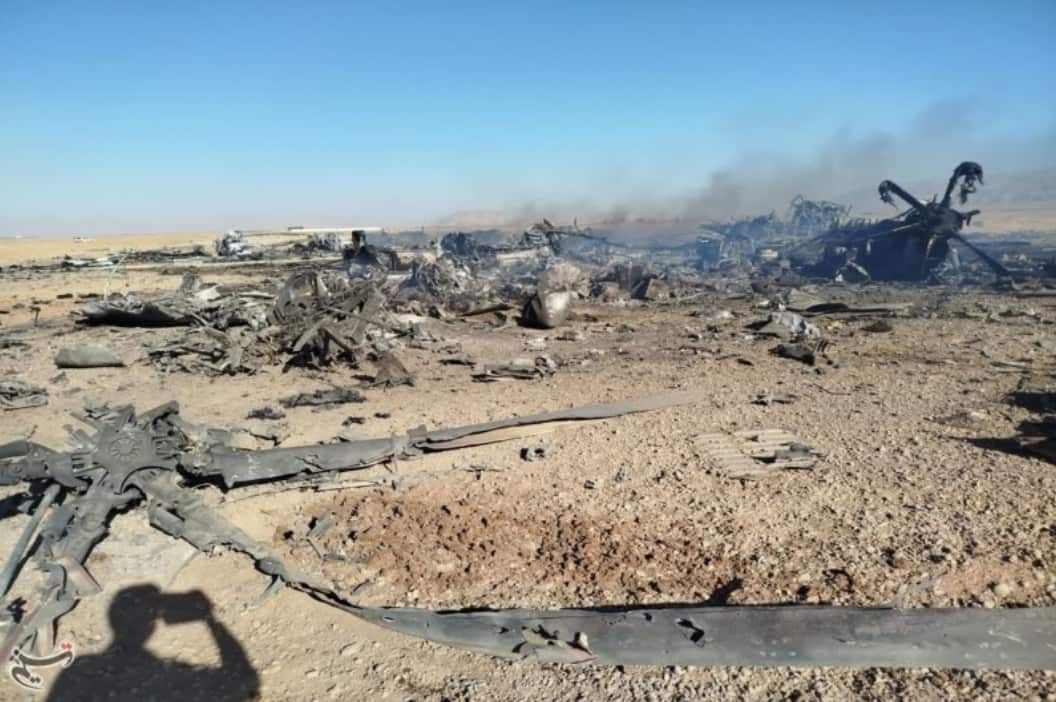
A spokesperson of the unified command of Iranian armed forces later said: "Additional investigations by experts on the ground revealed that two C-130 military transport planes and two Black Hawk helicopters of the US army were destroyed by our forces".
Tasnim has now released a series of images of what it says are destroyed US aircraft.
News that makes sense
Your trusted source for staying up-to-date with the world around you. Get free daily news updates and analysis, straight to your inbox.
Some initial US reports on social media claimed that during the process of rescuing the second crew member of an F-15 fighter jet downed over Iran, US forces blew up their own plane rather than let it "fall into Iranian hands", Türkiye's Anadolu Agency reported.
Separate statements by the Iranian army and the IRGC also said an Israeli Hermes-900 drone, as well as a US MQ-9 drone, were downed in Isfahan province.
Reuters could not immediately verify the Iranian accounts.
No official statement has yet been issued by the US regarding the Iranian claims, but a recent statement by US President Donald Trump said no US military personnel had been killed in recent rescue operations.
The claims emerged after Trump said the US had rescued the second member of a two-person crew of an F-15 jet, which Iran said on Saturday was brought down by its air defences.
The US military's recovery of the first member of the crew triggered a high-profile search for the plane's other crew member by both the US and Iran, the latter of which promised a reward for whoever turned in the "enemy pilot".
While Tasnim framed the claimed destruction of the aircraft as a "thwarting" of the US' mission to rescue the second serviceperson, Trump portrayed it as a great success.
"Over the past several hours, the United States Military pulled off one of the most daring Search and Rescue Operations in US History," read a statement attributed to Trump posted by White House press secretary Karoline Leavitt on X.
Trump said the crew member was injured, but "he will be just fine".
"The fact that we were able to pull off both of these operations, without a SINGLE American killed, or even wounded, just proves once again, that we have achieved overwhelming Air Dominance and Superiority over the Iranian skies," he said.
Strikes killed five Iranians during the rescue mission for the missing US crew member, Tasnim reported on Sunday.
Iran's military also said on Friday that it downed a US A-10 ground attack aircraft in the Gulf, with US media saying the pilot of that plane was rescued.
US authorities are yet to issue a formal statement on what caused the A-10 to crash, but anonymous US officials have told NBC News that it was also struck by Iranian fire.
Iran rejects Trump's 'all Hell' ultimatum
Trump has sent mixed messages ranging from hints of diplomatic progress to threats to bomb Iran "back to the Stone Ages" since the US and Israel launched the war on Iran on 28 February.
With the war in the Middle East now in its sixth week, Trump said overnight that Iran had 48 hours left to cut a deal or face "all Hell".
"Remember when I gave Iran ten days to MAKE A DEAL or OPEN UP THE HORMUZ STRAIT," Trump wrote on Truth Social, referring to an ultimatum issued on 26 March.
"Time is running out — 48 hours before all Hell will reign (sic) down on them."
Adding to the pressure, a senior Israeli defence official said Israel was preparing to attack Iranian energy facilities within the next week, and was awaiting approval from the United States.
Iran's central military command overnight rejected Trump's threat to destroy the country's vital infrastructure, with General Ali Abdollahi Aliabadi saying Trump's threat was "a helpless, nervous, unbalanced and stupid action".
Echoing the religious language of Trump's social media post, he warned that "the simple meaning of this message is that the gates of hell will open for you".
The war erupted more than a month ago with US-Israeli attacks on Iran, triggering a retaliation that has spread the conflict throughout the Middle East and convulsed the global economy — particularly due to the closure of the Strait of Hormuz, a vital conduit for oil and gas.
Attempts to broker peace amid continued attacks
Chances for peace talks, which Pakistan is seeking to broker between Washington and Tehran, appear to remain slim, and polls show low US public support for the war.
Still, Iran's foreign minister, Abbas Araqchi, left the door open for the talks.
"What we care about are the terms of a conclusive and lasting END to the illegal war that is imposed on us," Araqchi said on X, adding that Iran had never refused to go to Islamabad, which he thanked for its efforts.
Meanwhile, Egyptian foreign minister Badr Abdelatty held separate calls to discuss proposals for regional de-escalation with US envoy Steve Witkoff and regional counterparts, including Araqchi, the Egyptian foreign ministry said in a statement on Sunday.
Egypt, Türkiye and Pakistan have emerged as active intermediaries in the crisis, with Islamabad recently hosting a meeting to discuss regional de-escalation and proposals to reopen the Strait of Hormuz.
Oman and Iran also held talks on easing passage through the Strait of Hormuz, the Omani state news agency reported on Sunday, saying that "experts from both sides put forward a number of visions and proposals regarding it".
However, the US, Iran and Israel have continued to exchange blows, with a strike near an Iranian nuclear power plant prompting evacuations, Tehran announcing fresh attacks, and the Israeli military saying it had detected another missile launch from Yemen.
Iran has also continued to launch drones and missiles at Israel, while also targeting Gulf countries allied to the US, which have avoided directly joining the war for fear of further escalation.
Iran's Revolutionary Guards said they hit a commercial ship in Bahrain, as they maintained their tight grip on the Strait of Hormuz shipping lane, while Bahrain's military said it had now intercepted 466 drones and 188 missiles from Iran since the start of the war.
Iranian state TV said Iran's military launched drones at US radar installations and a US-linked aluminium plant in the United Arab Emirates and a US military headquarters in Kuwait, in retaliation for deadly attacks on Iranian industrial centres.
Kuwaiti state media, citing the finance ministry, said an Iranian drone hit an office complex for government ministries, causing significant damage but no casualties, in an attack Kuwait Petroleum Corp blamed for a fire there.
Kuwait's defence ministry said on Saturday that its air defence systems had successfully intercepted eight ballistic missiles and 19 drones over the last 24 hours.
Iran earlier attacked an Israel-affiliated vessel with a drone in the Strait of Hormuz, setting the ship on fire, state media said, citing the commander of the IRGC's navy.
The strikes are also going the other way, with an Israeli or US strike on a petrochemical hub in the southwest of Iran killing five people on Saturday, according to the deputy governor of Khuzestan province.
Yemen's Iran-aligned Houthis also said on Saturday they attacked Israel with a ballistic missile and drones, in a joint effort with the IRGC, the Iranian army and Lebanon's Hezbollah. It gave no evidence of the damage caused.
The Israeli Defence Forces (IDF) — which has been waging a parallel campaign against Hezbollah in Lebanon after the militant group fired at Israel in support of Iran — said on Sunday that it had begun striking "Hezbollah infrastructure sites" in the Lebanese capital of Beirut.
Lebanon's state-run National News Agency reported that an airstrike had hit a building in south Beirut on Sunday after the Israeli military issued an evacuation warning. An Agence France-Presse (AFP) news agency photographer saw a missile hit a building and Israeli warplanes flying at low altitude over the capital.
Meanwhile, an Israeli strike on southern Lebanon's Kfar Hatta, far from the border with Israel, killed seven people on Sunday, including a family of six, a source from the Lebanese civil defence told AFP.
The family had been waiting for a relative to pick them up in Kfar Hatta, a town around 70 kilometres from the border that Israel had ordered to be evacuated, AFP reported.
Lebanese President Joseph Aoun renewed a call for negotiations with Israel, saying he wanted to spare south Lebanon from destruction on the scale seen in Gaza.
Bushehr nuclear plant hit again
A strike near Iran's Bushehr nuclear plant on Saturday killed a guard and led Russia, which partly constructed the facility and helps operate it, to announce it was evacuating 198 workers and to condemn the strike as "an evil deed".
Araqchi warned the United Nations of an "intolerable situation that poses a serious risk of radiological release," state media reported, adding that continued attacks on the plant on the southern coast could eventually lead to radioactive fallout that would "end life in GCC (Gulf Cooperation Council) capitals, not Tehran".
Bushehr is considerably closer to Kuwait, Bahrain and Qatar than it is to the Iranian capital.
Rafael Grossi, head of the International Atomic Energy Agency, wrote on X that no increase in radiation levels had been reported at the site, but nonetheless voiced "deep concern" at what he said was the fourth such strike in recent weeks.
The latest attack comes after another projectile hit the nuclear power plant last week, but did not result in damage.
An Iranian strike had also hit the southern Israeli town of Dimona, home to a nuclear facility, in what Tehran said was in response to an earlier attack on its nuclear site at Natanz.
It prompted the United Nations to warn that strikes around Iran and Israel's nuclear sites risk could unleash an "unmitigated catastrophe" and that the war in the Middle East had created an "extremely dangerous" situation.
UN rights chief Volker Türk said many of the strikes in the weeks-long war "raise serious concerns under international law", cautioning that "recent missile strikes near nuclear sites in both Israel and Iran underscore the immense danger of further escalation".
Meanwhile, World Health Organization director-general Tedros Adhanom Ghebreyesus said the attack was "a stark reminder: a strike could trigger a nuclear accident, with health impacts that would devastate generations".
"With every passing day of this escalating conflict, the stakes and threats are raised higher and higher," he said.
For the latest from SBS News, download our app and subscribe to our newsletter.