


In brief
- The Iranian and US negotiating teams have arrived in Pakistan for talks on ending the war in the Middle East.
- The US is yet to agree to Iranian demands for certain conditions to be met before talks begin.
Senior United States and Iranian leaders are now in the Pakistani capital Islamabad for negotiations to end their six-week-old war, although Iran has thrown the talks into doubt by saying they could not begin without commitments on Lebanon and sanctions.
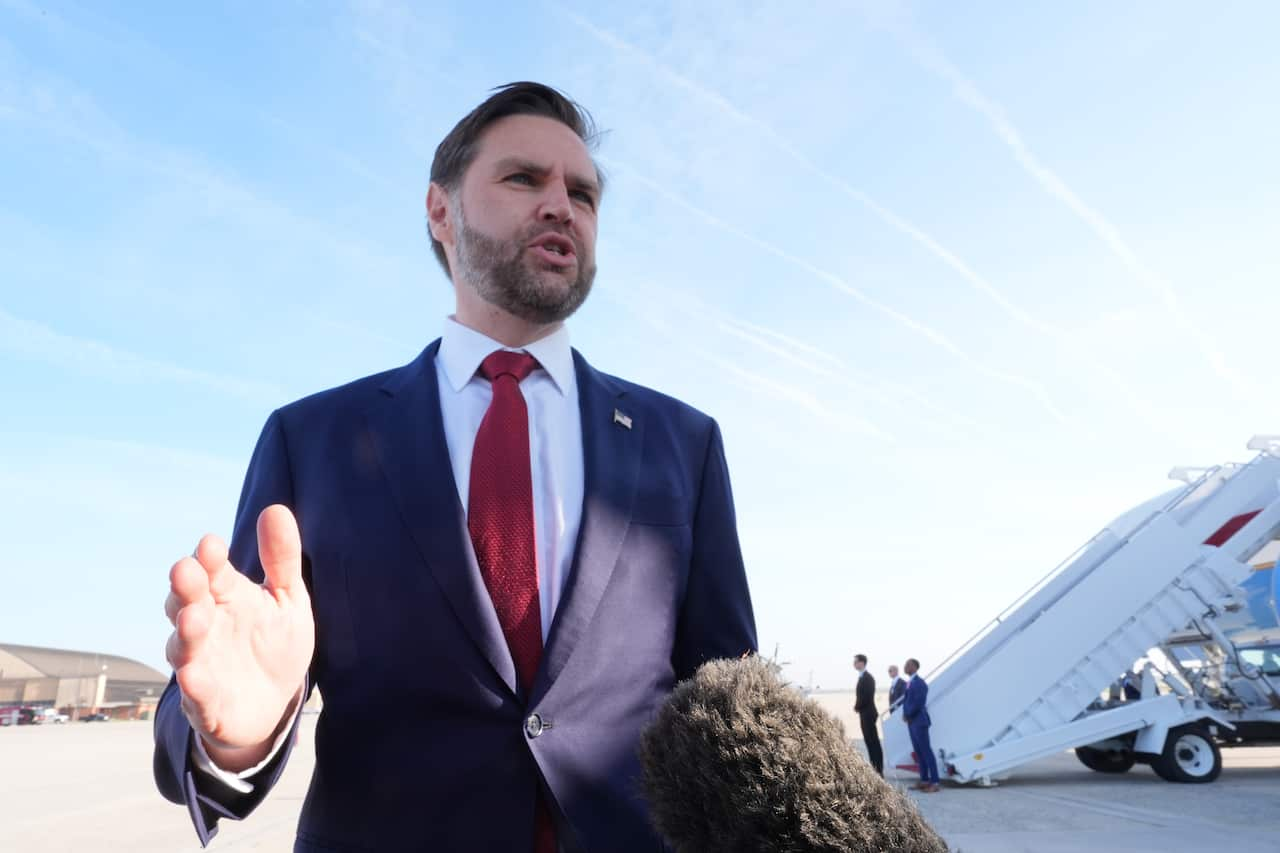
The US delegation — led by vice president JD Vance and including US President Donald Trump's special envoy Steve Witkoff and son-in-law Jared Kushner — landed in two US Air Force planes at an air base in Islamabad on Saturday morning.
The Iranian delegation, led by parliamentary speaker Mohammad Baqer Qalibaf and foreign minister Abbas Araghchi, arrived on Friday.
"We have good intentions, but we do not trust," Qalibaf said shortly after landing, according to Iran's state broadcaster. "Our experience in negotiating with the Americans has always been met with failure and broken promises."
These will be the highest-level US-Iran talks since the Islamic Revolution of 1979 and the first official face-to-face negotiations between the two sides since 2015, when they reached a deal on Iran's nuclear program, which Trump scrapped in 2018 during his first term.
News that makes sense
Your trusted source for staying up-to-date with the world around you. Get free daily news updates and analysis, straight to your inbox.
That year, Iran's then-Supreme Leader Ayatollah Ali Khamenei — who was killed at the start of the war six weeks ago — banned further direct talks between US and Iranian officials.
Qalibaf said in a social post on Saturday that the US had previously agreed to unblock Iranian assets and to a ceasefire in Lebanon, adding that talks would not start until those pledges are fulfilled.
Iran has been unable to obtain tens of billions of dollars of its assets in foreign banks, mainly from exports of oil and gas, due to US sanctions on its banking and energy sectors.
A senior Iranian source told Reuters that the US had agreed to release frozen assets held in Qatar and other foreign banks, welcoming the move as a sign of "seriousness" in the talks, in which Washington is pressing Tehran to reopen the Strait of Hormuz to international shipping.
A US official on Saturday denied that the US had agreed to unfreeze Iranian assets. Qatar's Foreign Ministry did not immediately respond to a request for comment.
Iran's state broadcaster said the Iranian delegation would meet Pakistani Prime Minister Shehbaz Sharif around noon local time (5pm AEST) to determine the timing and manner of "possible negotiations".
Vance also held talks with Sharif on Saturday, the White House and Sharif's office said, with Witkoff and Kushner also taking part.
The talks are expected to be indirect, with the Iranian and US delegations in separate rooms and Pakistani officials shuttling proposals between them.
While there was no immediate comment from the White House on the Iranian demands, Trump said in a social media post that the only reason the Iranians were alive was to negotiate a deal.
"The Iranians don’t seem to realise they have no cards, other than a short term extortion of the World by using International Waterways. The only reason they are alive today is to negotiate!" he said.
Trump told The New York Post on Friday that US warships were being reloaded with "the best ammunition" to resume strikes on Iran should the peace talks in Pakistan fail.
Vance said he expected a positive outcome as he headed to Pakistan, but added: "If they're going to try to play us, then they're going to find the negotiating team is not that receptive."
Sharif, in a national address on Friday night, laid out the stakes of the talks his nation is hosting.
"The permanent ceasefire is the next difficult phase, which is to resolve the complicated issues through negotiation. This, as called in English, is a make-or-break phase," Sharif said.
A Pakistani source close to the discussions told Reuters that his colleagues were feeling "very positive".
Asked if talks would end on Saturday, the source said: "Too early to say. They have instructions to close a deal or walk away. Hence not in a rush. These talks are not on the clock."
Israeli campaign in Lebanon continues
Trump announced a two-week ceasefire in the six-week war in the Middle East on Tuesday, just hours before a deadline after which he had threatened to destroy Iran's civilisation.
The ceasefire has halted US and Israeli airstrikes on Iran. But it has not ended Iran's blockade of the Strait of Hormuz, which has caused the biggest-ever disruption to global energy supplies, nor calmed a parallel war between Israel and Iran-backed militant and political group Hezbollah in Lebanon.
While some signs of diplomatic efforts to end hostilities have emerged, Israel's campaign has continued, and it remains a sticking point in negotiations between Iran and the US.
Iran insists that the US had previously agreed to a ceasefire in Lebanon as part of the two-week truce, while Israel and the US have said attacks in Lebanon are not part of the agreed ceasefire.
Israel launched the biggest attack of the war hours after the ceasefire was announced, killing more than 350 people in surprise strikes on heavily populated areas, Lebanese authorities said.
Israeli attacks continued across southern Lebanon on Friday.
One strike on a government building in the city of Nabatieh killed 13 members of Lebanon's state security forces, President Joseph Aoun said in a statement.
The militant group said overnight that it had carried out drone and rocket attacks on northern Israel, as well as on Israeli forces in southern Lebanon.
According to Lebanese authorities, at least 1,953 people have been killed in Israeli strikes since 2 March.
Meanwhile, the Israeli ambassador to the US and his Lebanese counterpart will hold talks in Washington on Tuesday, Israeli and Lebanese officials said, amid the conflicting accounts on what those talks would cover.
Lebanon's presidency said the two had held a phone call on Friday and agreed to discuss announcing a ceasefire and setting a start date for bilateral talks under US mediation.
However, Israel's embassy in Washington said the talks would constitute the start of "formal peace negotiations" and that Israel had refused to discuss a ceasefire with Hezbollah.
Lebanese President Joseph Aoun has repeatedly expressed readiness for direct talks with Israel since Hezbollah drew Lebanon into the Middle East war on 2 March with rocket fire at Israel in support of Iran, sparking massive Israeli strikes and a ground invasion.
Hezbollah lawmaker Hassan Fadlallah said on Saturday that the negotiations were a "blatant violation of the (national) pact, the constitution and Lebanese laws".
"It exacerbates domestic divisions at a time when Lebanon most needs solidarity and internal unity to face Israel's aggression and preserve civil peace", Fadlallah said in a statement.
"What the enemy has been unable to do on the ground ... it will not obtain in negotiations with an authority that lacks decision-making power, has abandoned its most basic duties, has failed to protect its people and cannot be trusted to safeguard national sovereignty," he added.
On Friday, dozens of Hezbollah supporters, some brandishing the group's flag or that of Iran, demonstrated outside the government headquarters and other parts of Beirut.
For the latest from SBS News, download our app and subscribe to our newsletter.