in brief
- The USS Abraham Lincoln and its roughly 5,000 sailors and marines completed a modern-era record of 286 consecutive days at sea.
- The carrier and accompanying vessels will spend five days in Thailand for rest and logistics.
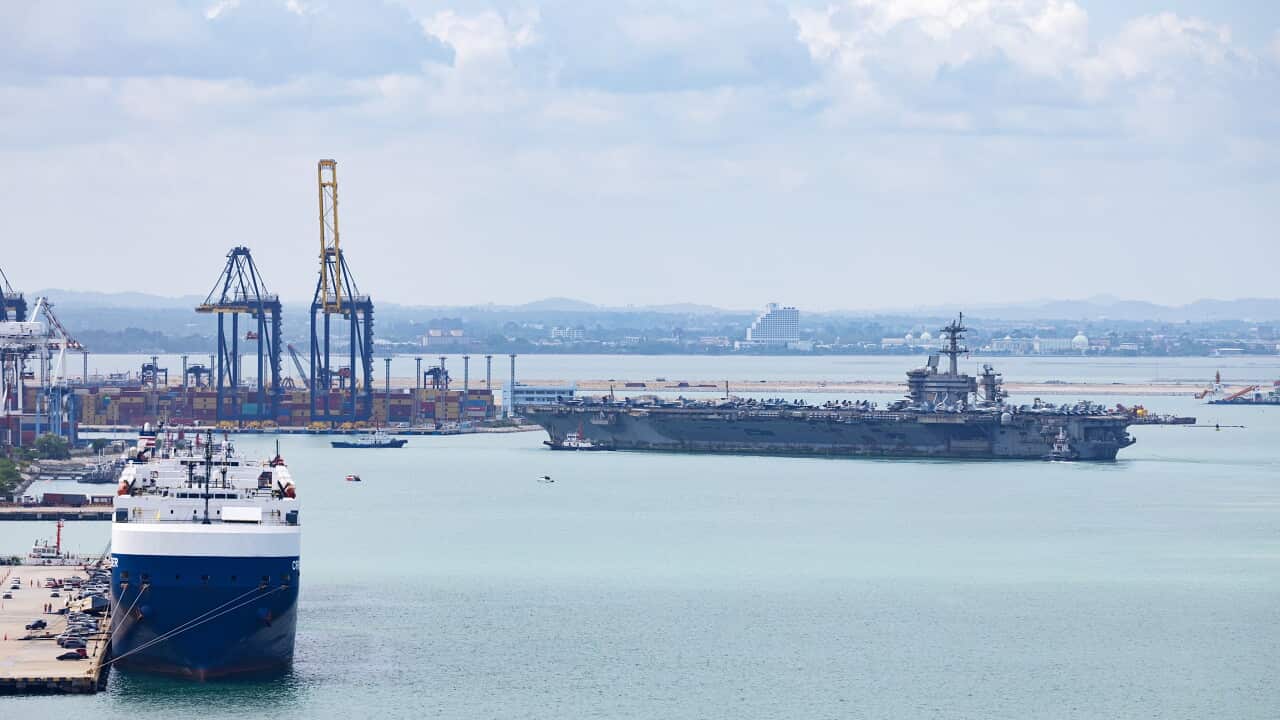
The United States Navy aircraft carrier USS Abraham Lincoln arrived at Thailand's Laem Chabang port on Wednesday after spending 286 consecutive days at sea.
The record-long deployment included an extended period in the Middle East, amid reports of mounting mental health concerns and deteriorating conditions aboard the vessel.
The carrier, which has around 5,000 sailors and marines on board, was deployed in November last year and took part in the US naval blockade and combat operations during the war with Iran.
US Navy deployments typically last between six and nine months, although they can be extended during periods of conflict.
This deployment set a modern-era record for consecutive days at sea, according to US officials.
News that makes sense
Your trusted source for staying up-to-date with the world around you. Get free daily news updates and analysis, straight to your inbox.
'Truly historic' voyage
The Abraham Lincoln, accompanied by other US naval vessels, will spend five days in Thailand for rest and recuperation, according to Thai officials.
Thailand is the US' only treaty ally on mainland Southeast Asia.
"Our arrival in Laem Chabang provides a well-deserved opportunity for our Sailors and Marines to rest and recharge. It also underscores the strong and enduring partnership and alliance between the United States and Thailand," the commander of Carrier Strike Group 3, Rear Admiral Robert E. Loughran, said in a statement.
"What this strike group has accomplished is truly historic. I could not be prouder of the exceptional professionalism and expertise demonstrated by every member of this team during our operations."

Thailand became a US treaty ally in 1954, before being designated a major non-NATO ally in 2003. Thailand's armed forces have long been reliant on US defence hardware and both countries' militaries maintain strong relations and hold annual exercises together.
Thailand has made it clear the visit is for logistics, rest, and recuperation, in line with its treaty commitments, and is not connected to the conflict in the Middle East.
The arrival of thousands of military personnel has raised hopes of an economic boost for the nearby resort city of Pattaya, which also has a longstanding reputation as a sex tourism destination.
A fleet of around 40 buses will ferry the military personnel between Pattaya and the port at Laem Chabang where the vessels will dock, Pattaya Mayor Poramase Ngampiches said. Pattaya sits on the Gulf of Thailand, about 150km southeast of Bangkok.
"There are certain places and activities that the personnel are prohibited from participating in, such as all kinds of water sports, jet skiing, bungee jumping, wrestling, and boxing," he told the Reuters news agency.
'Drinks' and 'letting loose'
Police will deploy additional patrols around Pattaya's main beachfront and nightlife district, following raids over the weekend that led to 40 to 50 people being detained for suspected prostitution, officials said.
Although illegal in Thailand, the sex industry operates openly in major tourism hubs, including parts of Bangkok and Pattaya, despite occasional crackdowns.
On the eve of the Lincoln's arrival, Pattaya street vendors near the city's infamous "Walking Street" nightlife zone were excited about the prospect of a sales boost.
Clothes seller Kadsalin Ketpa, who stocked up on US basketball vests and elephant-patterned trousers ahead of the port visit, told Reuters: "It's been so quiet these days."
"I hope with their arrival they would drive my sales up. I've prepared some products for them, I don't know if they will like them."
Food seller Saroch said port visits by the US military were good for business and always something to look forward to.
"They're here for drinks, having fun, and letting loose," he told Reuters.
For the latest from SBS News, download our app and subscribe to our newsletter.